














 Firma
Tonisity
Irlandia
3
Produkty
100
Publikacje
492
Obserwujący
Firma
Tonisity
Irlandia
3
Produkty
100
Publikacje
492
Obserwujący
Same market, very different outcomes: a new reality in China’s pig sector


China’s pig industry is still cyclical, but it no longer feels like everyone is riding the same wave
If you follow China’s listed pig producers, you still see the familiar cycle: prices rise, margins expand; prices fall, pressure spreads. What looks different in the latest publicly available updates is how uneven the outcomes have become. A small group remains meaningfully profitable. A wider set swings into losses or sees its profit buffer collapse. Over time, that pattern tends to reshape an industry.
How to read Chinese pig producers’ performance guidance
Before getting into names, one clarification that matters. Many Chinese issuers publish early annual performance guidance ahead of the final audited accounts
(业绩预告). In that format, results are often disclosed as a range rather than a single final number. The figures below are those publicly available ranges. The unit is 亿元 (CNY 100 million).
Profit dispersion is becoming the real story
The headline is not just who is profitable and who is not. It is the widening spread between operators. A small group remains strongly profitable, several peers are forecasting losses, and a couple of companies are technically profitable but with profit buffers that look very thin. In practice, that spread matters because it influences what each company can do next: invest, defend, restructure, or simply try to hold on.
Two profit anchors stand out in the public guidance. Muyuan Foods, with a pig-focused business spanning activities such as feed processing, pig breeding and raising, and meat slaughtering, reports expected net profit attributable to shareholders of 147–157 亿元, down 12.20%–17.79% year on year. Wens Foodstuff Group projects 50–55 亿元 of net profit, down 40.73%–46.12% year on year; their business is commonly described as livestock breeding and sales, including pigs and poultry. These declines are material, but both groups remain firmly profitable in a year when many peers do not.
Beyond the leaders, losses dominate
Once you move beyond those two, the mood changes quickly.
New Hope Liuhe, a group manufacturing and distributing feed and meat products, with livestock breeding, slaughtering and processing also in scope, indicates a net loss of 15–18 亿元.
Tangrenshen Group expects a net loss of 9.5–11.5 亿元; their activities include feed research and production, breeding pigs, raising commercial pigs, slaughtering, and meat processing.
Hunan New Wellful (engaged in pig breeding and distribution alongside feed processing, with pigs, meat and feed among its products) flags a net loss of 7.0–9.6 亿元.
Other names in the guidance reinforce the same point: many operators are in the red. Jiangxi Zhengbang Technology reports an expected net loss of 4.7–6.0 亿元; they are into feed and pig-linked operations, with animal health products also referenced. Beijing Dabeinong Technology Group forecasts a net loss of 4.5–5.8 亿元; the group has feed and pig farming activities, but is also frequently associated with broader agricultural inputs, including seeds. Shenzhen Kingsino Technology puts its expected net loss at 2.5–3.0 亿元; they are engaged in pig feed, alongside pig breeding related activities.
Pork pressure reaches diversified food groups
One company on the list is useful as a reminder that pork-linked pressure can show up inside broader portfolios. Beijing Shunxin Agriculture reports a net loss of 1.16–1.88 亿元. Public profiles commonly describe a business mix that includes distilled liquor and meat products, with hog-related exposure within the food segment. It is a smaller loss than some livestock-focused names, but it underlines that pork economics can still weigh on results even where pig farming is not the whole story.
Not every company is loss-making on paper, but two “still profitable” cases come with warning lights. Fujian Aonong Biological Technology Group reports expected profit of 0.90–1.35 亿元, yet a year-on-year decline of 76.70%–84.47%. Their product mix includes feed, pigs, and meat products. Leshan Giantstar Farming and Husbandry reports expected profit of 0.26–0.36 亿元, down 93.06%–94.99% year on year; they own a pig farming and feed business alongside a leather segment. Those are positive numbers, but they are also small cushions that can disappear quickly if conditions turn.
What these results really tell us
So what should a reader take from these ranges? Not that the cycle has gone away. Pig prices and input costs still move, and disease risk remains part of the operating reality. What the public guidance does show is that the same market backdrop is producing sharply different outcomes across listed companies.
Our takeaway is that this is increasingly an execution business. When prices are uncomfortable, the winners are the operators who keep improving productivity and predictability: better herd performance, tighter biosecurity, smarter feed strategy, disciplined expansion, and investment that raises output per unit of input. Over a few cycles, that compounding operational edge tends to matter more than the cycle itself.
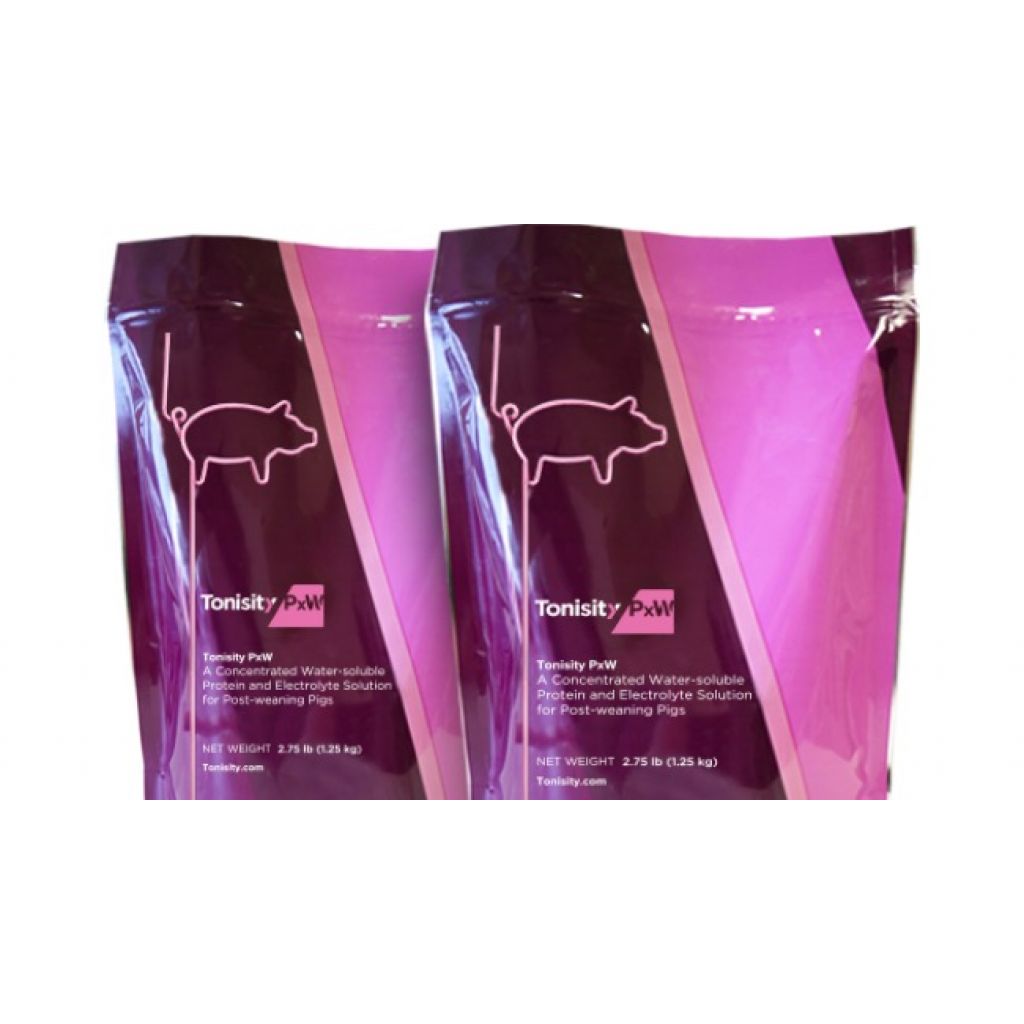
At Tonisity, this is exactly the kind of challenge we work on every day: helping producers improve performance, not by cutting for the sake of cutting, but by lifting productivity and outcomes so that they earn more. We have the privilege of working with some of the leading players in several countries, and the common thread is always the same: when execution improves, the numbers follow.

Kontakt:
Skontaktuj się z nami za pomocą poniższego formularza.